If you work in government contracting, as a contracting officer, procurement specialist, salesperson, proposal writer, accountant, finance person, or attorney, you already know the federal procurement regulatory environment is complicated. Within the Federal Acquisition Regulation (FAR), the Defense Federal Acquisition Regulation Supplement (DFARS), other applicable regulations, case law, agency rules, executive orders, and an ever-growing list of additional requirements, keeping up can feel like drinking from a firehose.
While bad actors cause some compliance failures, most are caused by people who didn't know what they didn't know. And that gap has consequences, sometimes very serious and expensive ones.
For government contractors, non-compliance is a legal risk and a business risk. Investing in training is one of the smartest decisions your organization can make to mitigate these risks.
Do you have a working understanding of FAR, DFARS, CAS, CMMC? What about TINA/ the TCPD Act, CPSR, or ITAR/EAR?
THE REGULATORY LANDSCAPE FOR GOVERNMENT CONTRACTORS
The FAR and DFARS get most of the attention, but they're just the starting point. Depending on your contract type and what you're working on, your team may also need a working understanding of:
| FARFederal Acquisition Regulation: the foundational rulebook for most federal procurement | DFARSDefense Federal Acquisition Regulation Supplement: DoD-specific additions to the FAR |
| CASCost Accounting Standards: 19 standards governing how contractors account for costs on negotiated contracts | CMMCCybersecurity Maturity Model Certification: now in full rollout, required for contracts involving sensitive defense information |
| CPSRContractor Purchasing System Review: evaluates whether your procurement system meets government standards | TINA / TCPD ActTruthful Cost or Pricing Data Act: requires submission of certified cost data; defective pricing can trigger contract redetermination, remittances back to the government, and even False Claims Act liability |
| ITAR / EARExport control regulations governing how defense and non-defense related technology and data can be shared, even internally | ESG / OtherEvolving environmental, social, and other regulatory requirements are increasingly embedded in federal contracts |
That's a lot to cover, and each framework carries its own audit requirements, penalties, and nuances. Missing a CMMC requirement can cost you contract eligibility outright. Getting a CAS disclosure wrong can trigger an audit chain that takes years to resolve. And the regulations keep changing, as we'll discuss below. The point isn't to overwhelm you; it's to make clear why piecemeal, on-the-job learning has real limits.
Did you know the DCAA is Watching? And doing more of it?
The Defense Contract Audit Agency (DCAA) audits billions of dollars in contractor costs every year. What many contractors don't realize is that DCAA isn't just a DoD watchdog, it also audits work for other agencies, including the Department of Energy, NASA, the Department of Homeland Security, and more. And it covers the entire contract lifecycle, from proposal review and forward pricing through incurred cost audits and final vouchers. There's no stage of a federal contract where DCAA isn't a potential presence. https://www.dcaa.mil/
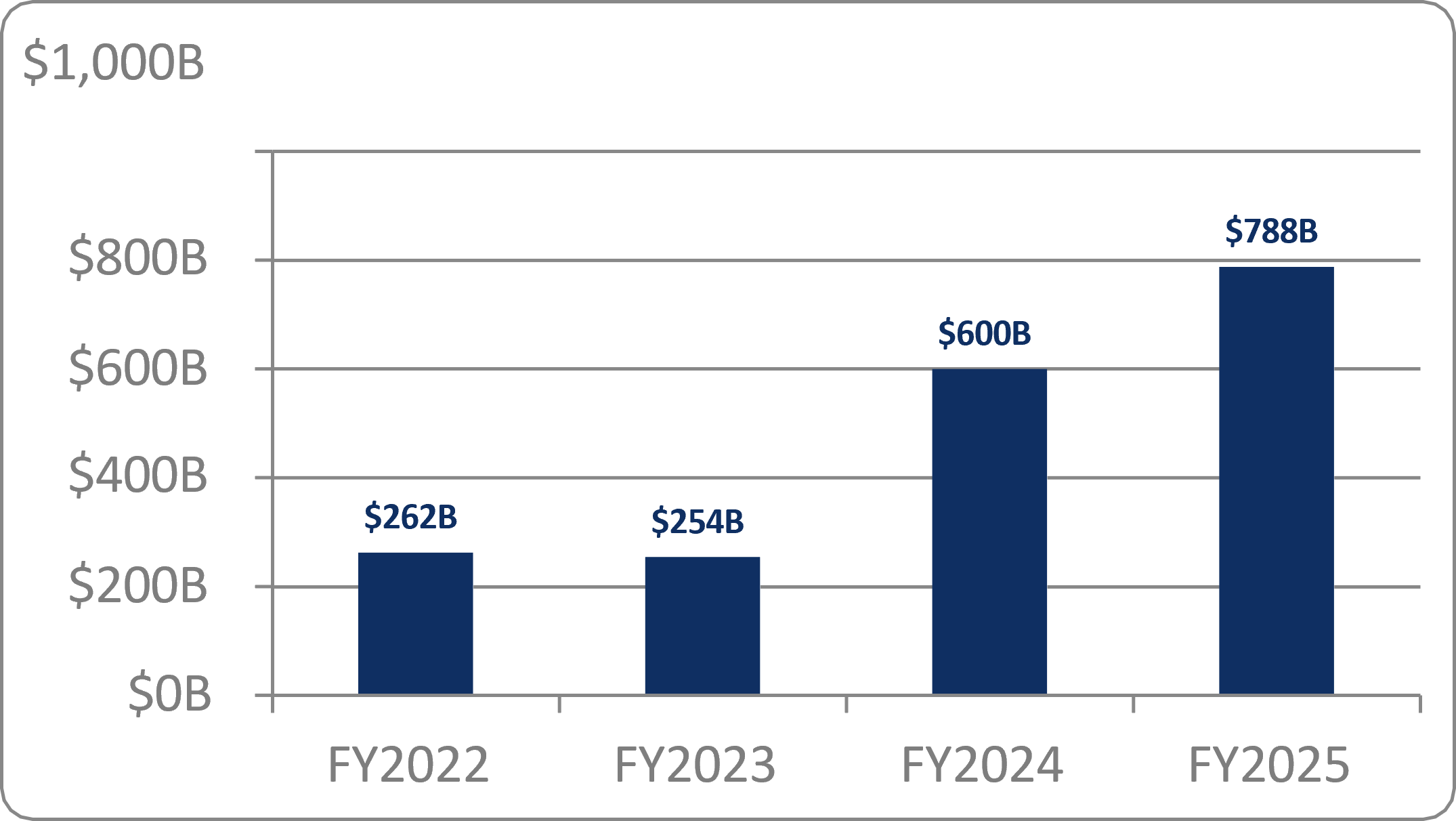
Contract Costs Reviewed by DCAA ($ Billions)
The scale of that scrutiny has been growing significantly. Look at what's happened in just the last four years:
Source: DCAA Annual Reports to Congress & FY2025 MD&A
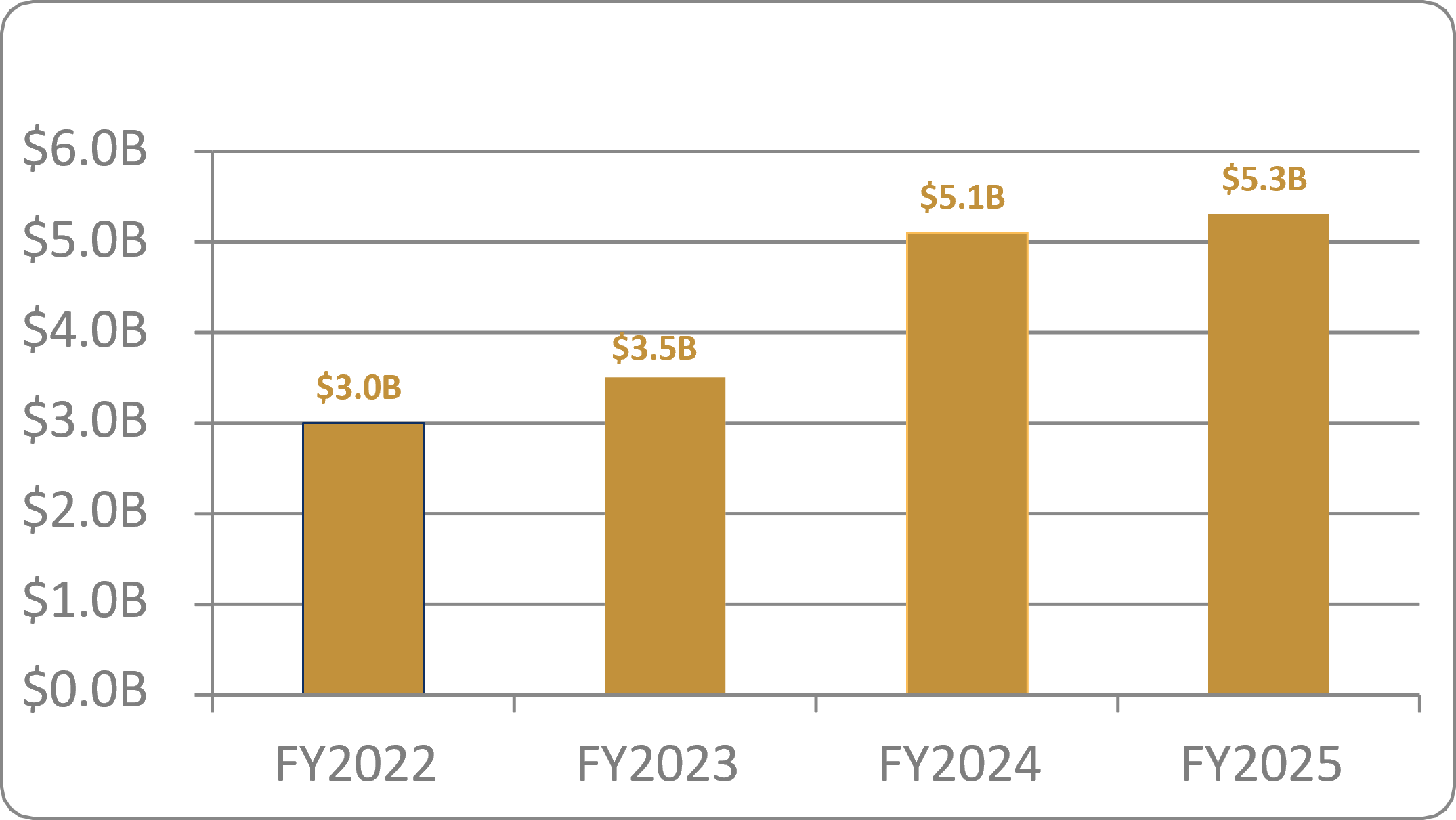
The numbers are striking. In FY2025, DCAA examined $788 billion in contract costs, more than triple what it reviewed just two years prior and issued more than 9,500 reports and memos identifying $5.3 billion in savings from contractors. And the actual amount of savings from contractors is much larger when you include the additional $4.2 billion in costs voluntarily deleted by contractors before the audit was even completed.
Contractors gave back $4.2 billion in costs voluntarily in a single year - before auditors even finished their work. Training helps your team know which costs they can defend, and which ones they can't.
A team that truly understands allowable cost principles doesn't have that problem. They know what they can bill, document it properly, and defend it under scrutiny. That's not theoretical, it's the difference between keeping revenue and losing it.
Do you think the DOJ is going anywhere?
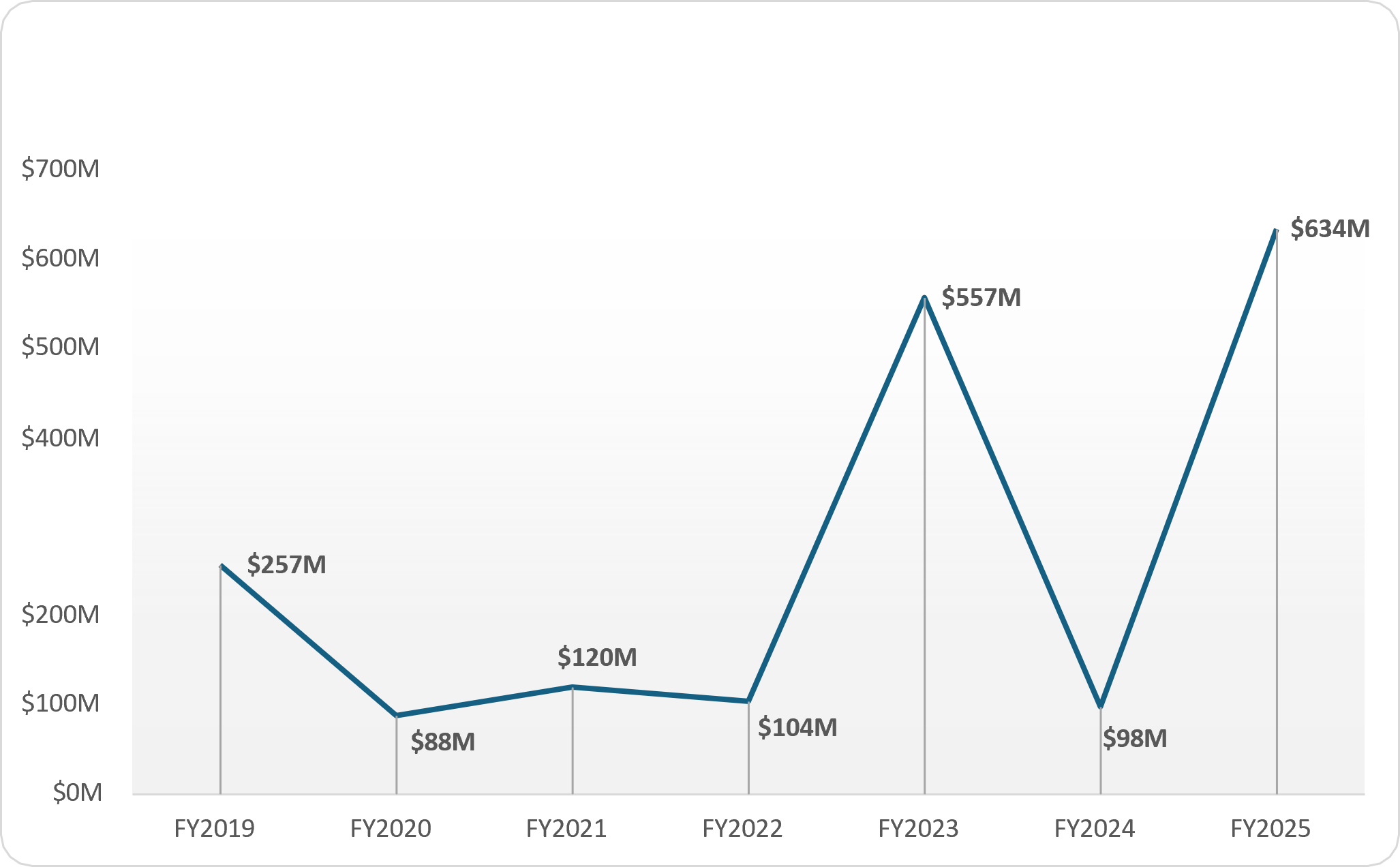
If DCAA is the audit risk, the Department of Justice is the litigation risk. False Claims Act settlements and judgments involving defense contractors have been substantial, and in FY2025 they surged to their highest level in nearly two decades, with over $633 million in recoveries from DoD contractors alone. https://www.justice.gov/
Source: DOJ Fraud Statistics - Department of Defense, FY2019-2025
Further, individual settlements can easily amount to tens of millions of dollars as shown in the table below:
| Contractor | FY | Settlement | Issue |
|---|
| Contractor 1 | FY2025 | $428M | False cost and pricing data submitted during contract negotiations; double billing on a weapons maintenance contract |
| Contractor 2 | FY2025 | $62M | Failure to disclose accurate cost and pricing data for communications equipment contracts |
| Contractor 3 | FY2025 | $30M | Defective pricing on military aircraft contracts |
| Contractor 4 | FY2025 | $21M | Inflated subcontractor charges passed through to the government on a State Department contract |
| Contractor 5 | FY2025 | $16M | Improper bidding, including use of confidential budget and competitive information. |
| Contractor 6 | FY2025 | $11M | False certification of cybersecurity compliance requirements in a defense health benefits contract |
~$100M+
Annual defense contractor False Claims Act procurement settlements since 2019
Notice the cybersecurity entry, an $11 million settlement for falsely certifying compliance with cybersecurity requirements. The DOJ has specifically called out cybersecurity non-compliance as a growing enforcement priority, and civil cybersecurity fraud settlements more than tripled in FY2025 alone. A gap in your cybersecurity posture isn't just a technical problem anymore; it's a legal one.
Wondering how often the Regulations Change?
The FAR and DFARS are living documents. They're updated regularly, with policy changes that can materially affect how contracts are structured, priced, and performed. A team trained to current standards today will face a meaningfully different regulatory environment within months.
Right now, that pace of change is faster than it's been in decades. The federal government is undertaking the first comprehensive overhaul of the FAR in its history, the "Revolutionary FAR Overhaul", aimed at rewriting the regulation in plain language, stripping out most non-statutory requirements, and returning it to its statutory roots. This is not a routine update. It's a structural rethink of the foundational rules governing every federal contract. Organizations that aren't actively tracking these changes risk applying outdated rules to new contracts, or missing flexibility they could be using right now.
Ongoing training isn't optional in this environment. It's how your organization stays current, stays competitive, and demonstrates to your government partners that compliance is built into how you operate, not bolted on after the fact. https://www.acquisition.gov/far-overhaul
Do You Know How to Apply the Rules?
Knowing the rules isn't enough. You need to know how to apply them.
Here's something textbooks don't tell you: the regulations are full of gray areas. The FAR lays out principles for allowable costs. But, deciding whether a specific cost is allowable, allocable, and reasonable in a specific situation? That takes judgment, the kind that comes from working through real scenarios with people who have been in the room when these types of questions arose.
Good training doesn't just hand you a rulebook. It walks you through how the rules work in practice. What does a defective CPSR look like when DCMA evaluators are sitting across the table? How do CAS disclosure changes ripple through a cost accounting system? What happens when a cybersecurity assessment surfaces gaps weeks before contract award? When your instructors have experienced those situations firsthand, as lawyers, accountants, proposal writers, contracting officers, and government officials, the training stops being abstract and becomes genuinely useful.
"Having served as legal counsel in various positions for the U.S. government, as in-house counsel for major aerospace companies, as a consultant to many small and medium-sized government contractors, and as an instructor for more than 30 years for FPS, I would strongly recommend FPS and its Federal Government Contract training to anyone wanting to expand significantly their knowledge of federal procurement and related topics, and to improve their performance in the workplace."
Michael Killham, FPS Instructor
Unify Training Across Teams and the Contract Lifecycle
Most compliance failures don't happen because a company has no expertise; they happen because of expertise gaps across teams and across contract stages.
Consider the fragmented training model: A company sends one person, often the staff attorney or the finance director, to a week-long contracting conference. That person comes back with notes, maybe a binder, and the best of intentions. They try to relay what they learned to the people in program management, supply chain, quality control, export compliance, HR, property management, and subcontracts. It rarely works. And there is a structural reason for that: the attorney doesn't know to ask the supply chain manager's questions. The finance director isn't thinking about the questions that keep the cybersecurity manager up at night. Information that never gets requested doesn't get learned and can't be passed on. Federal contracting touches nearly every corner of an organization, and fragmented training creates knowledge gaps and risk exposures.
Furthermore, beyond spanning functional teams, training needs to span the full contract lifecycle. Compliance issues don't just arise at performance time; they can start at the proposal stage, in how you price your work, in how your purchasing system is set up, and in how you account for costs years after a contract closes. Win. Perform. Comply. That's the full picture, and your entire team's knowledge base needs to match it. https://www.fedpubseminars.com/
The Unified Training Solution
| Across Functional Teams... | ...and the Contract Lifecycle |
|---|
- Business Development
- Legal
- Accounting
- Finance
- Program Management
- Quality Control
- Supply Chain Management
- Export Control
- Human Resources
- Subcontract Management
- Cybersecurity & IT
- Security (Classified Contracts)
| Win - Business development and capture
- Proposal preparation and submission
- Contract award and negotiation
Perform - Contract administration & execution
- Subcontracts and supply chain
- Accounting and auditing
- Cybersecurity & data
- Contract closeout
Comply - FAR / DFARS
- CPSR
- CMMC
- TINA / TCPD
- ITAR / EAR
|
Why does the Right Model Matter so Much?
The ROI Case: Think about training the way your finance team thinks about insurance. You're not paying for something you hope you never use; you're reducing the probability and cost of bad outcomes. A single False Claims Act settlement in the government contracting space routinely runs into the tens of millions. A DCAA audit that surfaces systemic issues can tie up your team for years. A failed purchasing system review can freeze contract awards. Compare that to the cost of keeping your people well-trained, and the math isn't complicated.
But there's another parallel that goes beyond risk management. Good insurance coverage doesn't work by predicting who's going to need a doctor next month. You buy coverage for your whole team - and when someone needs it, it's there. Training works the same way. You don't need to plan in advance which of your procurement officers will face a CAS question on Tuesday or which of your accountants will need to understand a new CMMC clause by Friday. When the right training is always available to your whole team, the knowledge is there when it's needed.
There's also a competitive upside that's easy to overlook. Contracting officers notice contractors who know what they're doing and work to improve. Agencies build long-term relationships with organizations they trust. A reputation for regulatory competence, the kind that comes from a genuinely well-trained team, is a business development asset, not just a risk management tool.
FPS: The Training Partner Built for This
FPS
For over 65 years, FPS has been the trusted source for compliance-led training across the government contracting lifecycle. Our network of nearly 100 nationally recognized instructors aren't academics, they're the attorneys, accountants, procurement officers, and former government officials who have actually worked in these regulations, argued these cases, and sat across the table from DCAA auditors. That real-world depth is what makes our training stick.
Our subscription model is designed to solve the coverage problem. With FPS, organizations can put their entire compliance team - accountants, lawyers, proposal writers, procurement professionals - on a plan that gives them unlimited access to hundreds of courses, webinars, and on-demand resources. No planning required. When a new regulation drops, when a clause gets updated, when an auditor shows up: your team is ready.
From winning proposals to performing contracts to navigating audits and investigations, FPS covers the full lifecycle, because so does your exposure.
Win. Perform. Comply.
Data sources: DCAA Annual Reports to Congress (FY2022-FY2025); DCAA FY2025 Management Discussion and Analysis; DOJ False Claims Act Fraud Statistics - Department of Defense (FY2019-FY2025); DOJ FY2025 False Claims Act Press Release and Fact Sheet (January 2026); acquisition.gov/far-overhaul. Contractor names in the settlements table have been omitted intentionally. All figures reflect publicly available government reporting.
Feeling uneasy? We have you covered. Visit fedpubseminars.com or contact Sarah Sprocket for more information about FPS government contracts training and enterprise solutions, at sarah@fedpubseminars.com.